Nov 15, 2010

Olive Ascolane recipe

L'infinito

Sempre caro mi fu quest'ermo colle,
e questa siepe, che da tanta parte
dell'ultimo orizzonte il guardo esclude.
Ma sedendo e mirando, interminati
spazi di là da quella, e sovrumani
silenzi, e profondissima quïete
io nel pensier mi fingo, ove per poco
il cor non si spaura. E come il vento
odo stormir tra queste piante, io quello
infinito silenzio a questa voce
vo comparando: e mi sovvien l'eterno,
e le morte stagioni, e la presente
e viva, e il suon di lei. Così tra questa
immensità s'annega il pensier mio:
e il naufragar m'è dolce in questo mare.


In one of his most appreciated works, the poem L’infinito, Giacomo Leopardi narrates an experience he often has when he sits in "his" secluded place on a Recanati hillside. His eyes cannot reach the horizon, because of a hedge surrounding the site; his thought, instead, is able to imagine spaces without limits. The silence is deep; when a breath of wind comes, this voice sounds like the voice of present time, and by contrast it evokes all times past, and eternity. Giacomo's thoughts drown in new and unknown waters, but il naufragar m’è dolce in questo mare, "my drifting shipwrecked in this sea is so sweet."

The Marche region can be defined as a food confederacy: influenced in the north by neighboring Romagna, southerly Abbruzzo and by Umbria, Toscany and Lazio to the west. The region's capital is the mountain-locked city of Ascoli Piceno. And the typical specialty there is Olive Ascolane, known to restore hope to even the rockiest, despondent pessimist.

Stuffed, breaded and fried olives from Ascoli: actual size
A blow to the liver, but incredibly tasty and original: green lightly brined olives that are rolled into perfect balls of ground veal and pork meat, then breaded and deep fried into crisp and tangy bite-size morsels of steaming nirvana. If buying the frozen supermarket kind doesn't appeal to you, assemble:

1 kg (2.2 lbs) green Ascoli olives (large, salted)
1 small onion, minced
1 carrot, minced
1 celery rib, minced
150 g (3/4 cup) lean veal or chicken
150 g (3/4 cup) lean pork
100 g (1/2 cup) prosciutto
A fistful of Pecorino Romano, grated
A fistful of Parmigiano, grated
4 eggs
50 g (1/4 cup) tomato concentrate
400 g (2 cups) breadcrumbs
400 g (2 cups) flour
1/2 glass dry, white wine
Extra virgin olive oil
1 teaspoon ground nutmeg
Vegetable oil for frying
Salt and pepper to taste

Put meats and prosciutto through food processor. Brown the meat mince, onion, celery and carrot in a skillet with the olive oil, adding very little salt and pepper and moistening with the wine. When the wine evaporates, cover and continue cooking until the meat is thoroughly browned, but not dry. In a large mixing bowl, incorporate cooled meat mix and cheeses, a dash of breadcrumbs, nutmeg, tomato and 2 eggs. Combine all by passionately blending with your hands, and cool off from the sensual kneading with a nicely chilled glass of Falerio dei Colli Ascolani.

Remove the pit from the olives. A good way is to carve them away with a sharp paring knife, starting from the top and working your way down, obtaining one single long strip like when peeling an apple. I've seen folks use a cherry pitter, and it works just as well.

Stuff the pitted olive pulp with the meat mixture, rolling each into 1-inch globes. If during the pitting phase some break, you can reconstruct them during stuffing.

First tumble them in the flour, then plunge them in the remaining beaten eggs and finally roll them in the breadcrumbs. Let the orbs rest a little before frying. So after a short nap, heat your vegetable oil in a large frying pan, or better, start the electric fryer (this will avoid the crust from falling off the olives during frying). Drop the balls in the hot oil and deep-fry for a few minutes.

Briefly dry on paper towel and polish off at luciferine temperature.


Planning to visit Ascoli Piceno?

What to see
The Roman Bridge of Solestà, built in the age of Augustus, and almost perfectly preserved. It can be visited inside, which offers rare insight on Roman bridge architecture.
The historical center of the city, built in grey travertino marble, extracted from the surrounding mountains.
The central Renaissance Piazza del Popolo is considered one of the most beautiful in Italy.
The cathedral of Sant'Emidio, period.
The Malatesta Fortress, rising on the site of ancient Roman baths, and reconstructed under Galeotto Malatesta, the lord of Rimini. The fortress was used as a prison until very recent times.
At Castel Trosino, there's an ancient necropolis, that dates back to the 6th century AD.

What to do
On the first Sunday in August, the historical parade for Sant'Emidio, the patron saint of the city. Fifteen-hundred citizens, outfitted in impressive Renaissance costumes, march down the corso to the sound of a steady drum-beat, and several file past on horseback. The parade is followed by a jousting tournament, called Quintana, during which six knights–each one competing for one of the six historical quarters in the city–in turn and armed with heavy lance astride their steed, thunder around a racetrack lunging forward, trying to pummel a cardboard figure of a Saracen warrior, Il Moro.

Image © Massimo Carradori

If you attend the Quintana festival, be prepared for a hot and exciting afternoon. The crowds get wildly involved in the scores of the jousts, cheering for their sestiere, much like the Palio held in Siena twice a year. For an out-of-town visitor however, an hour or two of parade and jousting might be enough, especially if traveling with children. It might be wiser at that point to repair to an air-conditioned room, lots of gelato under a leafy canopy, and plan dinner and more activities for the cool of evening.

Getting there
A rental car is your best bet. From the autostrada A14 (eastern coastal toll highway), take the exit San Benedetto del Tronto. There are easy to follow road signs that direct to the Ascoli city center from there on.

Ascoli Piceno can also be reached by regional trains, which run quite frequently and leave every 30 to 40 minutes, from either San Benedetto del Tronto or Porto d'Ascoli; both are stops on the Adriatic rail line. But be aware that the train station is just outside town, so you'll need to take a taxi to get to the centro. There is also a bus service from San Benedetto del Tronto that leaves from the train station and arrives in the center of Ascoli Piceno.


For more ideas and travel tips in Le Marche, be sure to swing by my friend Valerie who lived in Ascoli for a number of years before moving further south to Basilicata.

Nov 10, 2010

Polpettone di tonno - Tuna loaf recipe

Blurry vision and dry mouth.

I'm driving to work in gridlock traffic. At home my son's pale forehead burns, his throat is parched and his tiny stomach, still upset from the previous night's retching, gurgles ominously. 

Soft goodbye at his larger-than-usual chestnut eyes and infinitely long lashes: I whisper a guilty 'mommy has to go to work now,' and I choke back tears, while the unfamiliar babysitter stands in the doorway pretending she's not preoccupied.

This was Friday. A day that seemed neverending.

Fortunately this season's influenza intestinale bug only lasts 24 hours. The temperature is gone, no more projectile vomiting, and several sips of coke later, smiles and pink cheeks are back on Little E's face. I on the other hand have counted numerous new silver streaks in my hair.

It's hard to juggle work and a sick child. It's impossible to stay focused on the job while the person in charge of your sole reason for living can't get a clear reading on the thermometer (I couldn't help chuckling at how the sitter took my son's temperature, more like how you carry a baguette than an armpit lodge).

Tonight I cooked him the first real solid food meal after 3 days of tea and white rice. It felt like a party and the menu had to include a celebratory favorite. So I went with tuna loaf.

On a rainy sick day, nothing restores a smile back on my child's face like a good meatloaf, unrestrained cartoon-watching during dinner, and lots of boiled potatoes. This recipe revisits a family classic, employing tuna instead of leftover roast.

It takes very little effort, and your kids will gratify you with plenty cackle at the table.

600 g (3 cups) oil-canned tuna, well drained
150 g (3/4 cup) coarse homemade breadcrumbs
200 g (2 cups) Parmigiano, grated
9 eggs
1 cup broth concentrate
A dash of ground nutmeg

Put tuna and eggs through the food processor to obtain a supple purée. Remove from blender and knead in the breadcrumbs, cheese and nutmeg; and slowly ladle in some cooled stock, to keep mixture soft. You may not need to use up all the broth, just enough to moisten the loaf. 

Wrap the tuna loaf in a clean kitchen towel and fasten the ends with knots, candy wrapper-style.

Fill a large pot with water and bring to a rolling boil. Cook the 'tuna candy' for 20 minutes. Unwrap and let it cool. Serve sliced drizzled with olive oil and lots of steamed potatoes.

Nov 6, 2010

Arancini recipe

While forced to cope with capricious skin, summer crushes and wild hormonal hurricanes, my Positano teen posse and I would often sneak into the Buca di Bacco kitchen at 10 a.m. while chefs were just beginning their morning shift, and order dozens to go. We would pack our fried goods and dash off to the pier where someone’s motorboat was always ready to take us out to sea for a swim. Hours later–exhausted after diving competitions, snorkeling, trolling for scorpion fish, messy water polo matches and lazy sunbathing in the silence of a secluded cove–wolfing down our sun-warmed palle di riso was the best part of the day.

In Sicily they're called arancini, and quite a complex architecture of a snack. Pear-shaped and featuring elaborate fillings, the classic breaded and deep fried rice balls the size of a fist, traditionally have meat ragù, mushrooms and stewed peas in their filling. In other parts of Italy, similar flavor bombs–according to geographical area and assorted filling–go by different monikers: supplì (in Rome) are tomato-flavored and bullet shaped croquettes with a heart of mozzarella; arancini di riso are almost always creamy saffron risotto dome-shaped pucks, or round like oranges (the noun arancino means, small orange). Exotic new fillings in the rice mixture may include the likes of chopped porchetta, a pecorino and pepper mix, and even squid ink.

Palle di Riso–childhood lexicon–are the signature piece of Italian Fritto Misto all’Italiana–a sumptuous mixed vegetarian fried platter. Honoring tradition, I still prepare them according to the long-established Buca di Bacco recipe handed down by chef Andrea Ruggiero himself. I serve them along with a sauceboat of hearty homemade tomato sauce, and three in each plate: a meal.


500 g (1.1 lb) Arborio rice
100 g (1/2 cup) freshly grated Parmigiano or aged Provolone
300 g (1 1/2 cups) mozzarella, finely chopped
5 eggs
A packet of saffron, dissolved in 1 fl oz of hot water
Breadcrumbs, toasted
A fistful of polenta (cornmeal)
Flour for dredging
Peanut oil for frying
Salt

Combine the chopped mozzarella and a fistful of the grated cheese, and set aside.

Boil the rice in lots of lightly salted water, until it reaches the al dente stage. Drain and transfer to a bowl. Let it cool for 10 minutes, then season it with the remaining cheese, 2 lightly beaten eggs, and the diluted saffron. Mix well and let the thick mixture cool some more.

To make a rice ball, take a heaping tablespoon of rice and flatten it out against the palm of your hand, cupping it to make a hollow. Fill the hollow with a tablespoon of the mozzarella mixture and cover the filling with a little more rice, shaping the ball into an orange. Roll it in flour and repeat the ball-making process, until all the rice is used up.

Beat the remaining 3 eggs, season with a pinch of salt, and dip the balls in them. Combine the cornmeal and breadcrumbs and roll the eggy balls in the mixture, coating them well. Fry the palle in hot oil, until golden. Drain well on a paper towel, and serve them hot with your basic tomato sauce for some serious dipping.

Image © stefaniav

Trivia:
The Rome version of arancini is called supplì. These are often referred to as "supplì al telefono" – telephone-style. Do you know why? Because when you bite into a proper supplì, the mozzarella should string out like a telephone chord. The advent of cordless phones has made this old way of saying sadly obsolete.

Nov 1, 2010

Ossa dei morti recipe

My Nonna Titta raised me like a mother; like all grandmothers do in Italy–even before it was customary for working moms to leave home to bring income to the household.

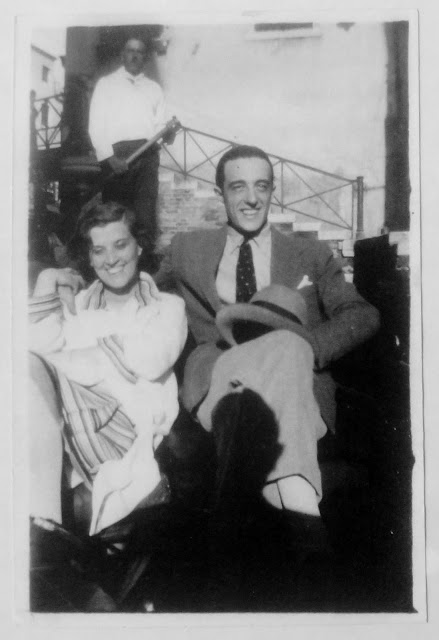
Yet Giuditta–Titta for her friends and immediate family–was not your average granny. She told fairy tales, baked cakes and occasionally knitted; but in her youth she had been a talented, successful and beautiful theater actress. And with a childhood worthy of a novel.
Giuditta Rissone, my nonna

Born into a theater family, she began touring around the world with the Ermete Zacconi theater company along with her parents and brothers from when she was old enough to stand (as a small child she was forced to play only boys' roles, a female child in theater was not happy news). The kids (four boys and one girl, Titta) were the younger thespians acting opposite turn of the century celebrities, while my great-grandfather was the "trovarobe," in charge of painting backdrops, collecting furniture, set dressing, props, etc. Nowadays this role is called Production Designer. His wife, my bisnonna Luigia, was a seamstress. She designed all the costumes for each production, and was in charge of cutting, stitching and fitting all.

This wild assortment of talent traveled away from Italy each summer, headed to South America, where the company performed mostly for immigrant patrons in theaters all over Paraguay, Uruguay, Argentina and Chile. Italians didn't only land in Ellis Island…

My nonna Titta didn't speak a word of English, but thanks to these annual 6-month tours, she was fluent in Spanish and grasped the rudiments of Portuguese.

Once the season ended abroad, the company would pack the staging equipment and navigate the Atlantic on steamships back to Europe, just in time for winter in the northern hemisphere. Titta loved the summer, because for so many years of touring, she said, summer was not an option.

Later, as she grew into a teen and then into a young woman, her talent and sophisticated flair put her in the limelight. She soon became leading lady in many popular 1920s stage productions, and her repertoire spanned from the Greek classics, Shakespearean drama, to humorous, intelligent and ironic contemporary pieces. In 1930 she met my grandfather, whom she formed a company with, and eventually married seven years later. My mom was born the following year, and this gave Titta the chance to finally retire from the theater scene at age 42.
My grandparents, Giuditta Rissone and Vittorio De Sica
Nonna and Nonno in Venice
Despite her separation from my grandfather (divorce didn't exist in Italy at the time), the hardships of WWII Italy, and being a single mother in the 1950s, Nonna managed to keep it together, and star in 25 films between 1933 and 1966. One of the last roles she played was in 1962, as Marcello Matroianni's mother in the Fellini masterpiece 8 1/2.

As I said, like many nonnas, mine was a key figure during my childhood, she was there for me while my mom was working full time, adjusting to divorced life, and mourning my grandfather's premature death. Nonna Titta was great company, a playful, unconventional, tender and witty companion. She and I produced wonderful role games, during which I'd introduce her to my latest child (I owned many dolls at the time) and we'd chat and gossip like ladies over teacups of sugared tap water. Nonna spoiled me like only grandparents can (and are allowed to). And she taught me to appreciate good food through her virtuoso cooking skills.
Nonna Titta and I, ca. 1970
Me and Nonna, 1970
My son didn't get a chance to meet his great-grandparents, one of my biggest regrets. It's important that he learn about his extended family, here in Italy and the one abroad. I can start by introducing him to his great-grandmother Titta, by telling him her wonderful stories, showing him photographs and paintings, reproduce her recipes and replicate those everyday gestures of love I grew with.
Handing down cooking knowledge

Halloween is a recent celebration in Italy. The related observance we do honor on the other hand is i morti: an Italian two-day festivity bridging November 1st (All Soul's Day) and November 2nd (Day of the Dead). This is not a morbid or mournful holiday, rather a celebration of life. Ossa dei Morti, or "Bones of the Dead," are among the numerous traditional (and almost always almond-laced) Italian cookies commonly enjoyed on this occasion. There are many different regional recipes for Ossa dei Morti, these particular hard and crunchy meringue ones are from Piemonte, where nonna Titta was originally from.


She was very superstitious, so I hope she won’t mind if I associate her to this rather disturbing, sepulchral recipe name. If you hear thunder tomorrow, it’s probably her, complaining from heaven.

Giuditta Rissone, my nonna


250 g (1 cup) flour
100 g (1 1/4 cup) hazelnuts (ideally from the Langhe region, in Piemonte), shelled and left whole
100 g (1 1/4 cup) almonds, coarsely ground (I put them in a freezer bag and pound the heck out of them)
400 g (2 1/4 cups) brown sugar
2 egg whites, beaten
Juice of 1/2 lemon
Pinch of ground cloves
Pinch of cinnamon
Butter and flour to grease and dredge the cookie sheet

In a large bowl, combine the flour, sugar, egg whites, and lemon juice. Work in the nuts and spices, and continue kneading until you have a fairly firm dough. Roll the ball of dough out with your hands forming it into a rope. Cut the rope into 2-inch sections.

Preheat oven to 180° C (360° F).

Butter your cookie sheet, dust with flour, and lay the 'bones' on it distanced form one another, and bake for about 20 minutes. Let the cookies cool to jaw-breaking hardness before serving with a glass of Moscato or Vin Santo. Amen.
Ossa dei morti cookies for November 1st
Image © savoringtimeinthekitchen.blogspot.com

Oct 24, 2010

Gnocchi from scratch


You have to be patient.

Making gnocchi takes practice and persistance. At their best potato gnocchi can be delicate. At their worst, they turn ot dense, rubbery, or soggy. In the worst case scenario, the gnocchi fall apart in the boiling water before even meeting their condiment. I'm not trying to scare you off from making them, I just want you to know what you're in for. The trick is using a small quantity of egg to hold the potato/flour mixture together.

1 kg (2.2 lbs) russet potatoes
300 g (1 1/2 cups) all purpose flour
2 egg yolks, beaten
1 tablespoon of extra virgin olive oil
Salt

Boil the unpeeled potatoes 30-40 minutes (according to potato size) in lightly salted water, resisting the temptation to pierce them with a fork, this floods the potato structure with boiling water, thus damaging the dough.

Let the potatoes cool a bit then peel and mash them with a hand-powered mill or a ricer, straight into a bowl.

Once completely cool, mix them with the egg yolks and olive oil. Now sift the flour over the potatoes and mix it in with a wooden spoon. Do this with gentle movements, only until the flour is moist and the dough looks crumbly.

Pour the potato/flour mixture over a board dusted with flour and knead briefly as you would any other pasta dough.

Note: Over-kneading may make the dough tougher, so keep it to a minimum to obtain a uniform consistency, considering you'll be also dusting extra flour to prevent the dough from sticking to the work surface.

Cut a fist-size piece and roll it into ropes about 3/4-inch in diameter and use a knife to cut each into 3/4-inch buttons. Use your thumb to make an indentation in each piece. This can be achieved with the help of the back of a cheese grater or the tines of a fork, and it gives gnocchi a rough surface in which the sauce finds refuge. As you produce the gnocchi, moves them on a plate and keep going, fistful after fistful, until all the dough is used up.
Image © Foodnuveau.com
Technically all this can be done in advance, but it is better not to let too much time pass between the making and the cooking. While you're cutting the gnocchi, bring a pot of water to a rolling boil. Once all the gnocchi are ready, toss a dozen of them into the water and wait until they all surface. This takes less than 2 minutes, so it is important that your attention does not wander. Use a skimmer (or a slotted spoon) to fish the floating gnocchi out of the pot and place them in a bowl covered with a tight lid or plastic wrap, so the gnocchi keep warm. Repeat the casting-fishing routine until all gnocchi are cooked.

UPDATE:
For a splendid gnocchi tutorial, complete with extra information and a useful video, visit Foodnouveau – Merci, Marie!

Share!